What a Sweep Here Actually Removes
Creosote is not one substance. First stage is flaky soot that brushes off. Second stage is crunchy and layered. Third stage is a hard black glaze that has run down the flue wall like tar and set - and it is the one that matters, because glazed creosote is what carries a chimney fire.
Which one you have is mostly decided by how the appliance is run, not by how much wood goes through it. A stove burning steadily at temperature keeps the flue hot and the deposits light. A stove lit for an evening and let go out, in a house that is not heated the rest of the week, runs the flue cool and wet on every cycle and lays down the glaze. That is why the hardest flues we open in this county are not in the houses that burn the most wood - they are in the ones that burn occasionally.
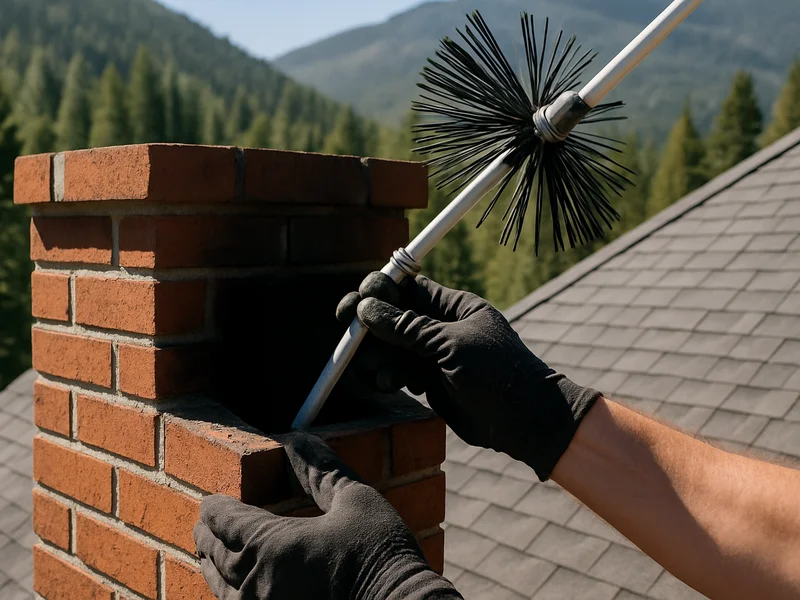
A sweep gets the flue back to the liner, clears the smoke shelf and firebox, and - because the brush changes what you can see - ends with a Level 1 inspection of everything now visible.
What's Included
- Full flue swept to the liner, from the roof or from below as the system requires
- Firebox, smoke shelf and damper cleaned out
- Level 1 inspection of the accessible system, findings written down
- Photographs of anything we flag, taken the same day and handed over
- Drop cloths over the hearth and floor, HEPA vacuum running throughout
Masonry, Class-A and Inserts Are Three Different Jobs
In town you get brick and clay tile, often 1890s-1920s, where the questions are crown condition, mortar joints and whether the tiles have shifted. In the foothills and out toward Bayfield you get class-A insulated stainless pipe, where there is no masonry to fail but the joints, storm collar and the pipe's inner wall all can. And in a lot of Durango living rooms there is an insert dropped into an original fireplace, sometimes with a proper liner up the flue and sometimes - on older installations - venting straight into an oversized masonry chimney it was never sized for.
That last case is worth naming because it is common here and it gets missed. An insert dumping into a full-size unlined flue cools its exhaust too fast, condenses it, and glazes the chimney at a rate the homeowner cannot square with how little they burn. If we find it, you will hear about it with the camera footage attached, not as a verbal warning.
When to Book
September and October are the busy weeks and they fill first. If your appliance is your main heat, book before the first cold snap; you do not want to discover a problem the week you need the stove. Second homes and rentals are better done in the shoulder season, while access is easy and there is still time to fix what turns up.
Chimney sweeping by town
Not sure it's due?
Send a photo of the flue or tell us how you burn. If it does not need sweeping this year we will say so.
Get a Free Quote