Sweeping a Chimney That Predates the Liner Code
A good share of the chimneys in central Durango were built before anyone required a flue liner at all. What you have in those houses is brick around a void, sometimes with clay tile added later, sometimes with a stainless liner run down it in the last thirty years, and sometimes with nothing between the fire and a hundred-year-old party wall.
Sweeping one is not harder than sweeping a modern flue - it is a different set of things to watch. Brush pressure that is fine in a tiled flue can move tile that has already cracked. Unlined brick sheds mortar into the smoke shelf and that tells you more about the chimney's condition than anything visible from the room. And a flue that steps or offsets, as many of these do to reach a shared stack, needs the rod fed rather than driven.
The Insert Question, Which Is Really the Durango Question
If your Victorian has a wood-burning insert sitting in the original fireplace, the first thing worth knowing is whether it is lined all the way up. On installations from the seventies and eighties, frequently it is not - the insert vents into the full-size masonry flue, which is several times the cross-section its exhaust was designed for.
The result is a chimney that glazes far faster than the owner's burning habits would suggest. People tell us they only light it a dozen times a winter and are then shown third-stage creosote on camera. That is not a mystery, it is fluid dynamics: too much cross-section, gases cool below condensation point before they clear the top, and the difference lands on the flue wall.
We pull the insert forward as part of the sweep where the installation allows it, because that is the only way to see the connection. It adds time. It is also the single most useful thing anyone has done to a lot of these chimneys in decades.
Shared Stacks and Neighbours
Downtown you will also find chimneys serving more than one flue, and terraced or near-terraced buildings where the stack is shared with the property next door. If smoke from your fire is turning up in somebody else's room, that is a cracked division between flues rather than a sweeping problem, and it wants a camera before it wants a brush. We will tell you which one you have.
Also in Durango
Chimney Sweeping elsewhere
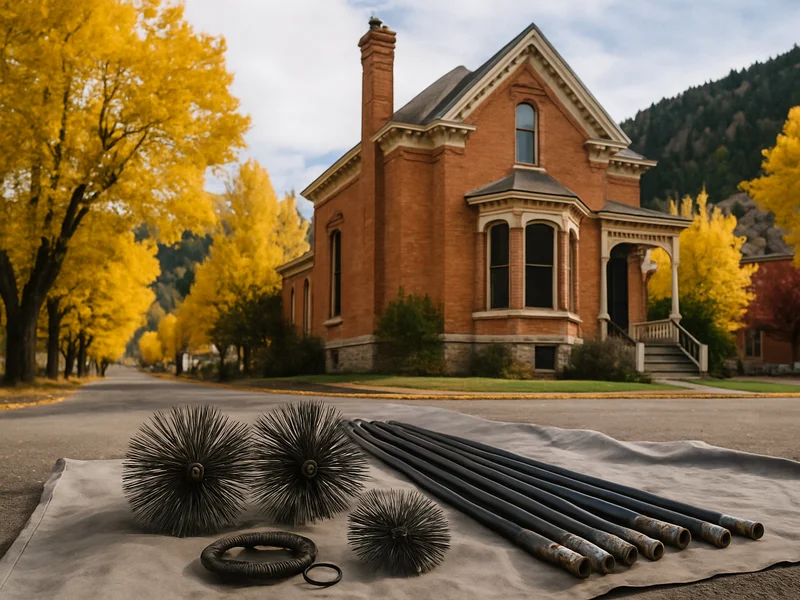
Chimney Sweeping in Durango
Tell us the appliance and how it is used. You get a firm number before anyone starts.
Get a Free Quote