Wood Here Is the Heating System, Not the Ambience
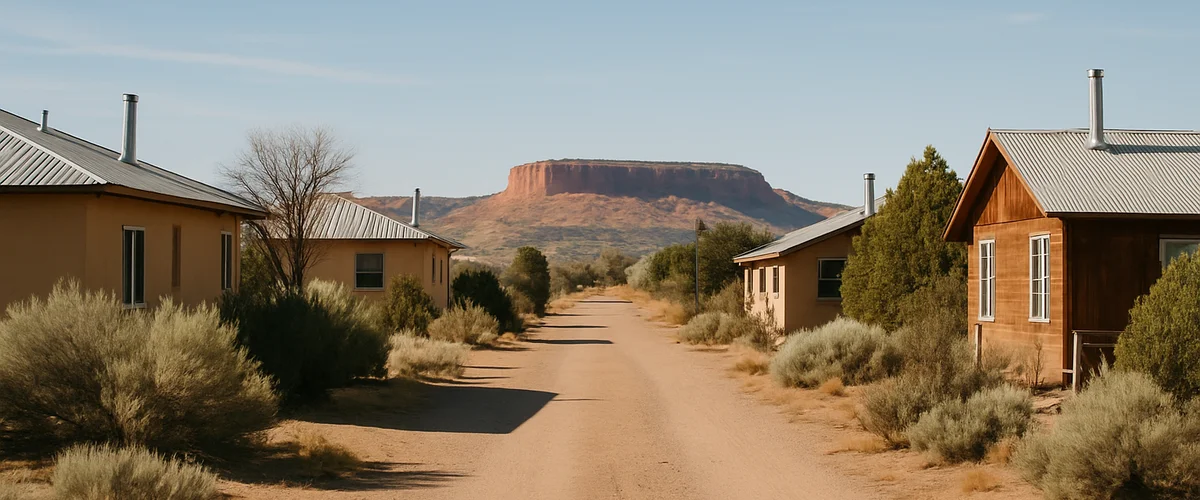
Cortez and the country around it look nothing like the pine slopes above Durango, and the chimney work reflects that. This is high desert at 6,200 feet: sagebrush and juniper, big sky, dry air, and a housing stock that runs to single-storey stucco, frame and manufactured homes rather than Victorian brick.
What those houses have in common is that a great many of them are off the natural gas main and heat with propane and wood. That changes the job. A freestanding stove that is genuinely heating the house from October to April, burning juniper and piñon as often as not, produces a very different flue from a fireplace lit on holidays - more volume, higher temperatures, and deposits that reward being taken seriously once a year rather than once a decade.
Class-A Pipe, Not Masonry
Most of what we sweep out here is stainless insulated class-A pipe rather than brick and clay tile. That is a different set of questions. There is no crown to crack and no mortar to fail, but the sections have joints that can separate, storm collars and flashings that perish in this UV, and an inner wall that is thin steel doing the same job a two-inch clay tile does elsewhere.
The important consequence is that class-A that has actually failed gets replaced, not repaired. That makes the annual look more valuable here than it is on a masonry chimney, because the thing you are trying to catch is corrosion and joint movement early, while it is a section, rather than late, when it is the whole run.
Piñon, Juniper and What They Do to a Flue
Local wood is worth a paragraph. Piñon and juniper are resinous and they burn hot and fragrant, which is why people like them - and the resin is exactly why they deposit heavily when burned cool or green. Juniper in particular is often burned less seasoned than it should be because it is available and it splits easily.
None of that is an argument against burning what grows here. It is an argument for burning it dry and hot, and for not stretching the sweep interval on the assumption that a stove burning "clean-looking" wood is keeping a clean flue.
Same Price as Durango
Cortez is 45 miles from our usual ground. We handle that by batching Montezuma County onto scheduled route days instead of driving out for single call-outs, which is what makes it possible to charge the same rate here as in town. Booking neighbours on the same day genuinely helps, and if you have one we will usually work around your date rather than ours.
What we do in Cortez
Cortez route days
We batch Montezuma County onto scheduled days. Say Cortez when you call and we'll give you the next one.
Get a Free Quote